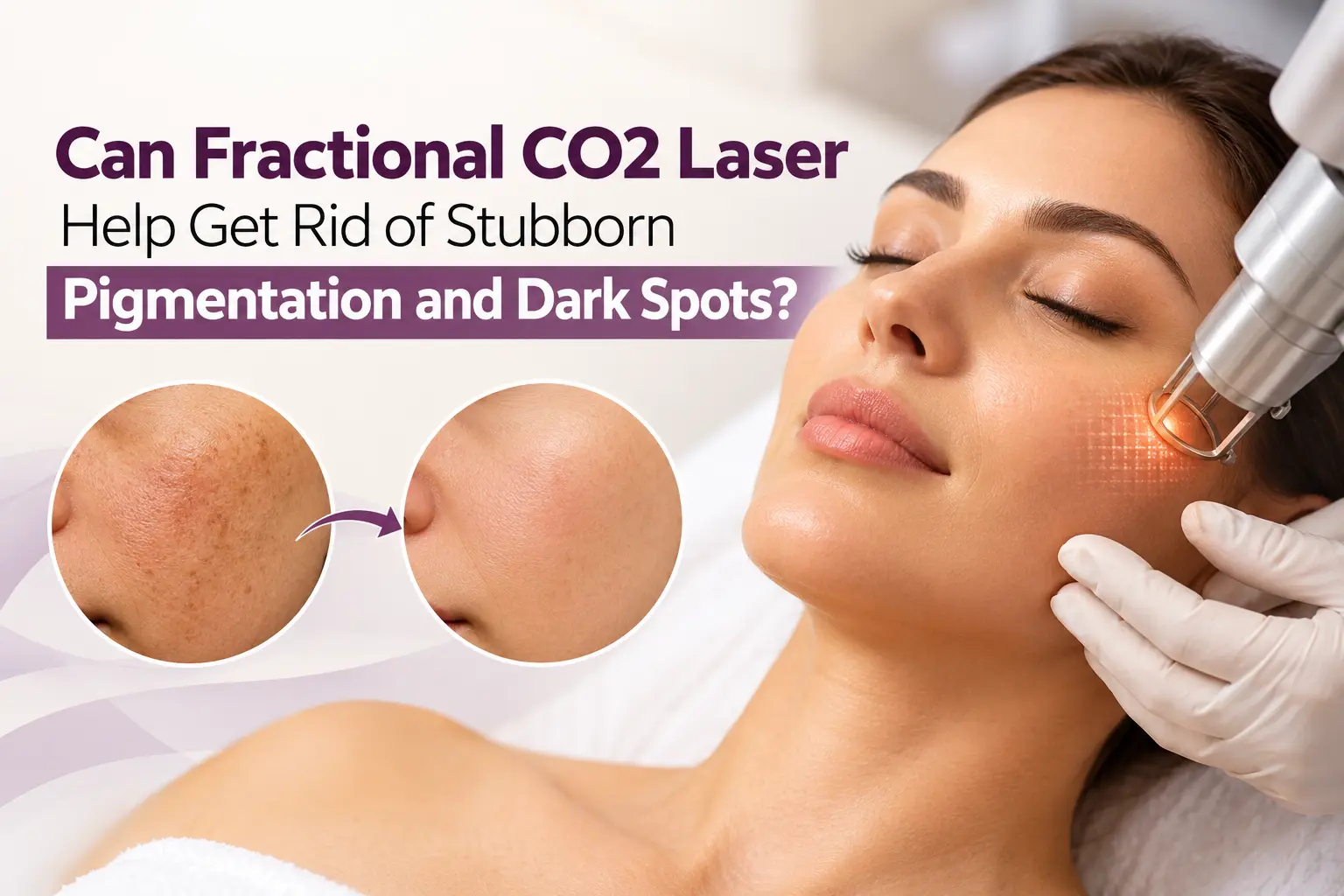
Have you tried creams, serums, and home remedies for dark spots but still feel like your pigmentation keeps coming back?
Uneven skin tone, sunspots, acne marks, and age-related pigmentation can be difficult to manage because they aren’t always limited to the surface of the skin. While skincare products can help improve mild discoloration, some pigmentation may require a more targeted treatment.
One option that dermatology and aesthetic professionals may recommend is Fractional CO2 Laser resurfacing.
At AuraSculpt Med Spa, Fractional CO2 Laser treatments in Manhasset and Plainview are designed to improve the appearance of pigmentation while also addressing skin texture, acne scars, fine lines, and other signs of skin damage.
What Is Fractional CO2 Laser?
Fractional CO2 Laser is an advanced skin resurfacing treatment that uses controlled laser energy to create microscopic treatment zones in the skin.
Instead of treating the entire skin surface at once, the laser targets tiny areas while leaving surrounding skin untreated. This helps encourage the body’s natural healing process while stimulating collagen production and skin renewal.
As the treated skin heals, damaged cells are gradually replaced with newer, healthier-looking skin.
This makes Fractional CO2 Laser more than just a pigmentation treatment—it can also help improve the overall quality and texture of the skin.
Why Do Dark Spots and Pigmentation Develop?
Pigmentation occurs when the skin produces excess melanin, the natural pigment responsible for skin color.
There are several reasons why pigmentation can appear, including:
- Prolonged sun exposure
- Acne and acne-related inflammation
- Hormonal fluctuations
- Aging
- Previous skin injuries
- Post-inflammatory hyperpigmentation
- Environmental exposure
- Certain types of melasma
Because pigmentation can have different causes, treatment should be customized according to your skin type and the type of discoloration present.
How Can Fractional CO2 Laser Improve Pigmentation?
Fractional CO2 Laser can improve the appearance of pigmentation by resurfacing damaged areas of skin and encouraging new skin formation.
1. Targets Damaged Skin
Laser energy creates controlled microscopic treatment areas that encourage the removal and replacement of damaged skin cells.
2. Promotes Skin Renewal
As the skin heals, older and damaged cells are gradually replaced with newer skin, which can make pigmentation appear less noticeable.
3. Stimulates Collagen
The treatment stimulates collagen remodeling beneath the skin. This can help improve firmness, texture, and the appearance of fine lines at the same time.
4. Improves Overall Skin Tone
As pigmentation and damaged surface skin improve, the complexion may appear brighter and more uniform.
What Types of Pigmentation Can It Address?
Fractional CO2 Laser may be considered for several pigmentation-related concerns, depending on the individual patient.
These can include:
- Sunspots
- Age spots
- Certain acne-related dark marks
- Post-inflammatory hyperpigmentation
- Uneven skin tone
- Pigmented acne scars
- Sun-damaged skin
- Rough or uneven skin texture
However, not every type of pigmentation should automatically be treated with a CO2 laser.
For example, melasma can be particularly challenging because aggressive laser treatment may sometimes worsen pigmentation. A professional skin assessment is therefore important before choosing a treatment.
Fractional CO2 Laser Does More Than Treat Dark Spots
One of the biggest advantages of fractional laser resurfacing is that pigmentation isn’t the only concern it can address.
Depending on your skin and treatment plan, Fractional CO2 Laser may also help improve:
Acne Scars
The treatment can encourage collagen remodeling, helping soften the appearance of certain acne scars and improve uneven skin texture.
Fine Lines
Collagen stimulation and resurfacing can reduce the appearance of early signs of aging.
Uneven Texture
Rough or irregular-looking skin may appear smoother as new skin develops.
Sun Damage
Laser resurfacing can help improve the appearance of certain visible signs of accumulated sun damage.
Dull-Looking Skin
By promoting skin renewal, treatment can help the complexion look fresher and more radiant.
What Happens During a Fractional CO2 Laser Treatment?
Before treatment, your skin will be evaluated to determine whether Fractional CO2 Laser is appropriate for your concerns.
During the procedure, the treatment area is cleansed and a topical numbing cream may be applied to improve comfort.
The laser is then carefully applied to the selected area.
A typical treatment may include:
- Skin cleansing
- Application of topical anesthetic
- Controlled Fractional CO2 Laser treatment
- Cooling or soothing of the treated area
- Application of recommended post-treatment products
Treatment time varies depending on the size and number of areas being treated.
Is There Downtime After Fractional CO2 Laser?
Yes. Fractional CO2 Laser is a resurfacing procedure, so some recovery should be expected.
Depending on the intensity of treatment and your individual skin response, you may experience:
- Redness
- Mild swelling
- Warmth
- Sensitivity
- Dryness
- Peeling or flaking
- Temporary changes in skin color
Your provider will give you specific aftercare instructions to support proper healing.
It’s especially important to protect treated skin from UV exposure, since excessive sun exposure can contribute to pigmentation and interfere with recovery.
When Will You See Results?
You may notice changes in skin texture and appearance as the skin begins to heal.
However, the final results don’t happen overnight.
Skin renewal and collagen remodeling continue after treatment, so improvements may become more noticeable over the following weeks and months.
The number of treatments required depends on factors such as:
- Type of pigmentation
- Depth of pigmentation
- Skin type
- Treatment area
- Existing acne scars or texture concerns
- Individual healing response
Some patients may benefit from a single treatment, while others may require a series of treatments.
Is Fractional CO2 Laser Suitable for Every Skin Type?
Not necessarily.
Fractional CO2 Laser can be effective for many patients, but people with darker skin tones may have a higher risk of developing post-inflammatory hyperpigmentation after certain laser treatments.
That’s why choosing the appropriate laser settings and treatment approach is important.
A consultation allows your provider to assess your pigmentation, skin tone, history, and goals before recommending a treatment.
How Can You Protect Your Skin After Treatment?
After a laser resurfacing treatment, proper skincare is essential.
Your provider may recommend:
- Using a gentle cleanser
- Keeping the skin moisturized
- Avoiding unnecessary sun exposure
- Applying broad-spectrum sunscreen
- Avoiding harsh exfoliants until the skin has healed
- Following all post-treatment instructions
Daily sun protection is particularly important because UV exposure can contribute to new pigmentation.
Fractional CO2 Laser vs. Skincare Products
Skincare products and laser treatments serve different purposes.
Topical products may help support skin health and address mild pigmentation over time. Fractional CO2 Laser, on the other hand, uses controlled energy to resurface the skin and stimulate a deeper healing response.
For some patients, a combination of professional treatments and a consistent home skincare routine may provide the best approach.
Your provider can determine which combination is appropriate for your skin.
Frequently Asked Questions
Can Fractional CO2 Laser completely remove dark spots?
Fractional CO2 Laser can significantly improve the appearance of certain types of pigmentation, but complete removal cannot be guaranteed. Results depend on the cause, depth, skin type, and individual response.
How many Fractional CO2 Laser sessions are needed?
The number of sessions varies. Some patients may see meaningful improvement after one treatment, while others may require multiple sessions.
Does Fractional CO2 Laser hurt?
A topical numbing cream is commonly used before treatment to improve comfort. You may still feel warmth, heat, or mild discomfort during the procedure.
How long does the skin take to heal?
Recovery varies based on treatment intensity and individual healing. Redness, sensitivity, and peeling can occur during the initial recovery period.
Can Fractional CO2 Laser help acne scars and pigmentation together?
Yes. One of the benefits of fractional resurfacing is that it can address multiple concerns, including certain acne scars, uneven texture, fine lines, and pigmentation.
Is Fractional CO2 Laser safe for darker skin?
People with darker skin tones may have a greater risk of post-inflammatory pigmentation following certain laser treatments. A professional evaluation is important before treatment.
Can pigmentation return after laser treatment?
Yes. New pigmentation can develop due to sun exposure, hormonal factors, acne, or other underlying causes. Sun protection and appropriate skincare can help maintain results.
Give Your Skin a Fresh Start
Persistent pigmentation can be frustrating, especially when dark spots remain despite a consistent skincare routine.
Fractional CO2 Laser may offer a more advanced approach by combining skin resurfacing with collagen stimulation and skin renewal. It can potentially improve not only pigmentation but also acne scars, uneven texture, fine lines, and visible signs of sun damage.
At AuraSculpt Med Spa, we provide customized Fractional CO2 Laser treatments in Manhasset and Plainview, with treatment recommendations based on your individual skin concerns and goals.
If you’re considering laser treatment for pigmentation or dark spots, a professional consultation is the best place to start.
Book a consultation with AuraSculpt Med Spa and discover whether Fractional CO2 Laser is right for your skin.