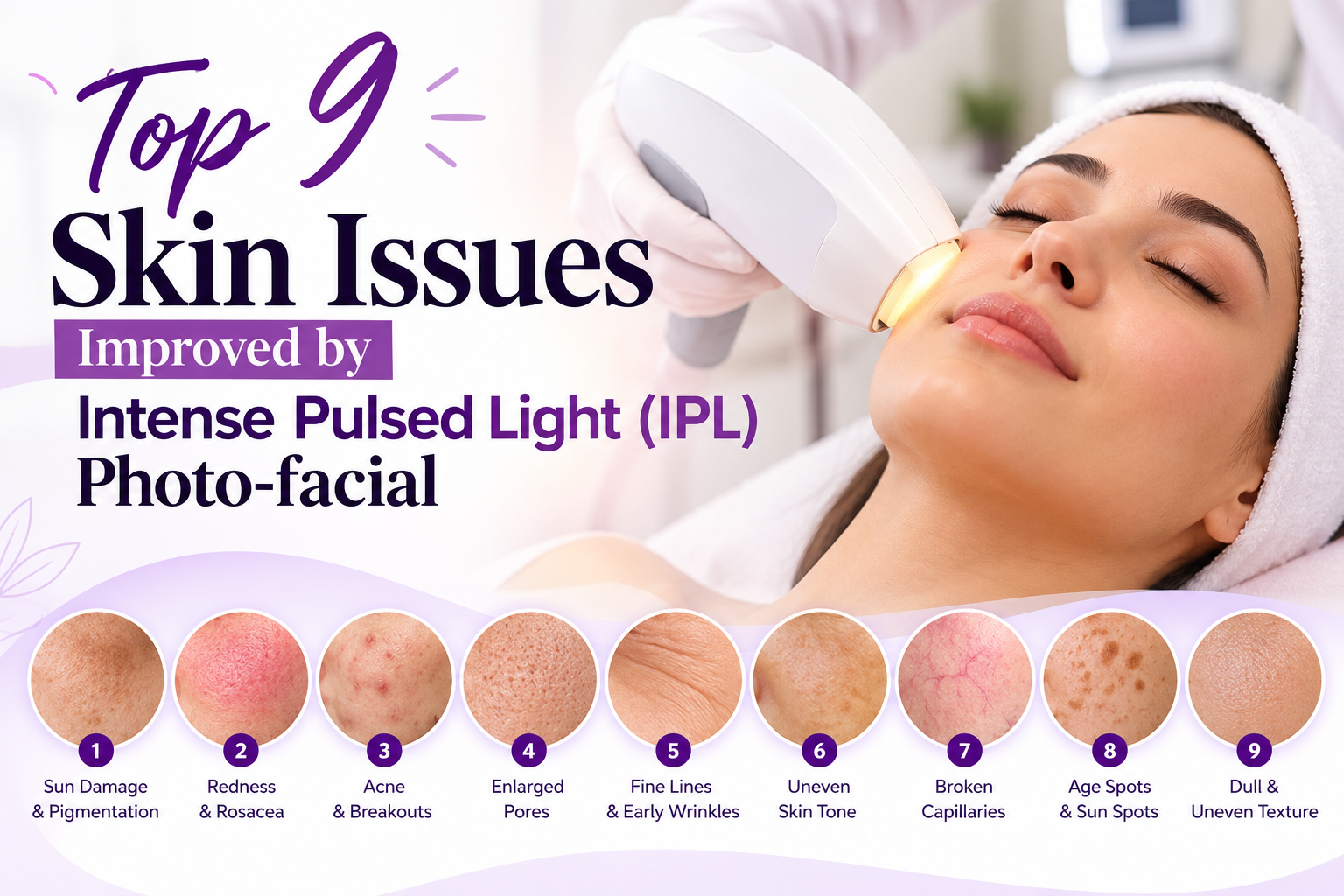
An IPL photo-facial is a quick, non-surgical treatment that uses light energy to improve sun damage, uneven tone, redness and early signs of ageing. Years of sun exposure, pollution, hormonal changes and stress show up on the skin as spots, redness, dullness and rough texture. Creams and facials can help, but many of these concerns sit deeper than a surface treatment can reach.
That is where Intense Pulsed Light comes in. Also called a photo-facial or photorejuvenation, it is one of the most popular skin treatments in clinics because it targets several concerns in a single session, with little to no downtime for most people.
In this guide, we cover the top 9 skin issues that an IPL photo-facial can help improve, what to expect during treatment, and who should think twice before booking. If you are looking for IPL treatment in Manhasset, AuraSculpt Med Spa offers IPL photo-facials and can assess whether the treatment suits your skin.
How Does an IPL Photo-facial Work?
IPL sends gentle pulses of broad-spectrum light into the skin, and the pigment or blood vessels that absorb that light are gradually broken down and cleared by the body. Unlike a laser, which uses a single wavelength, IPL uses a range of wavelengths. This lets the practitioner target brown pigment, red vessels and deeper collagen in the same treatment.
Here is what happens in the skin:
- Pigmented areas such as sun spots absorb the light, darken slightly and then flake away over the following days.
- Tiny blood vessels that cause redness absorb the light and are gradually reduced.
- Collagen-producing cells are stimulated by the gentle heat, which can improve tone and texture over time.
The skin surface is not removed, which is why the treatment is often described as a “lunchtime” procedure.
1. Sun Spots and Age Spots
Sun spots, also called solar lentigines, are the most common reason people choose an IPL photo-facial. These flat brown patches appear on the cheeks, forehead, nose and hands after years of sun exposure.
The melanin in the spots absorbs the light energy. The spot then darkens, forms a fine crust and naturally flakes off within about a week. Many people see a visible lightening of these spots after one to three sessions, although results vary by skin type and depth of pigment.
2. Freckles and Uneven Pigmentation
Freckles are small clusters of pigment that often darken with sun exposure. IPL can reduce the appearance of many freckles and soften patchy, uneven colour across the face.
If you like your freckles, tell your practitioner before treatment. The goal can be to even out tone without removing them completely.
3. Facial Redness and Rosacea-Related Flushing
Persistent redness on the cheeks and nose is often caused by dilated surface blood vessels. IPL light is absorbed by the haemoglobin in those vessels, which can reduce the redness over a series of sessions.
IPL is widely used to manage the visible redness of mild to moderate rosacea. It does not cure the condition, so ongoing skincare and trigger management still matter. Your doctor should confirm that IPL is suitable for you.
4. Broken Capillaries and Spider Veins
Fine red or purple lines around the nose, cheeks and chin are small surface vessels that have widened. IPL heats these vessels so they close and are gradually absorbed by the body.
This works best on thin, superficial vessels on the face. Larger or deeper leg veins need a different treatment, so your practitioner will assess which approach fits.
5. Dull, Uneven Skin Tone
When pigment and redness build up together, skin looks tired and patchy even when it is clean and moisturised. A series of IPL sessions treats both at once, which can leave the complexion clearer and more even.
This is why a photo-facial is often chosen before weddings, events or as a seasonal refresh.
6. Post-Acne Redness and Mild Acne Marks
After a pimple heals, it often leaves a pink or red mark that can last for months. IPL targets the small blood vessels behind these marks and can help them fade faster.
Some clinics also use specific IPL settings to calm mild inflammatory acne. IPL is not a stand-alone treatment for moderate to severe acne, so see a dermatologist for an acne plan first.
7. Enlarged-Looking Pores and Rough Texture
IPL gently heats the upper layers of skin and stimulates collagen, which can make pores look smaller and the surface feel smoother. The change is usually gradual and builds over a course of treatments.
IPL does not permanently shrink pores. Results depend on your skin type, oil production and skincare routine.
8. Early Fine Lines and Loss of Glow
The gentle heat from IPL encourages the skin to produce new collagen, which can soften early fine lines and improve firmness and radiance. This works best as a preventive or early-stage treatment in your late 20s to 50s.
IPL is not a facelift. Deep wrinkles and sagging skin respond better to treatments such as radiofrequency, microneedling or lasers.
9. Sun Damage on the Neck, Chest and Hands
The face often gets all the care, while the neck, chest and backs of the hands show the same sun damage. These areas can develop brown spots, redness and a blotchy look.
IPL can be used on these areas to even out colour and reduce spots. The skin here is thinner and heals more slowly, so settings are usually gentler and sessions may be spaced further apart.
What to Expect: Sessions, Downtime and Results
Most people need a course of treatments rather than one session. Your practitioner will set the number of sessions and the gap between them after a skin assessment.
Results differ from person to person. A clinic should never promise a fixed outcome.
Who Should Avoid IPL, and Safety for Indian Skin Tones
IPL is not right for everyone, and a proper consultation comes first. The treatment is generally not advised if you:
- Have a recent tan or sunburn
- Are pregnant
- Take medicines that make skin sensitive to light, including isotretinoin, so tell your doctor about all your medicines
- Have a history of keloid scarring, active skin infection or certain skin conditions
- Have melasma, as heat and light can sometimes worsen it
Skin tone matters. Deeper skin tones, common across India, hold more melanin, which absorbs more light and raises the risk of burns and dark patches after treatment. The IPL device can be used safely on many skin tones only with careful settings, a patch test and an experienced practitioner. Choose a clinic that assesses your skin type before every course.
Aftercare Tips for Better Results
Good aftercare protects your results and lowers the risk of side effects.
- Use a broad-spectrum sunscreen of SPF 30 or higher every day, and reapply outdoors
- Avoid direct sun, tanning, saunas and hot showers for the first few days
- Do not pick or scrub the darkened spots; let them flake off on their own
- Use a gentle cleanser and a fragrance-free moisturiser
- Skip retinoids, strong acids and exfoliants until your practitioner says it is safe
- Follow the advice you are given on makeup and skincare timing
Frequently Asked Questions
Is an IPL photo-facial painful? Most people feel a brief, warm snapping sensation. A cooling gel or device keeps it comfortable, and numbing cream is sometimes used.
How many sessions will I need? Usually 3 to 5, spaced 3 to 4 weeks apart. Your practitioner will adjust the plan to your skin and concern.
How long do the results last? Existing spots and redness can stay improved for a long time, but new sun damage can form. Yearly maintenance and daily sunscreen help.
Is IPL the same as a laser? No. A laser uses one focused wavelength, while IPL uses a broad spectrum of light. IPL is often chosen for treating several concerns in one session.
Can I wear makeup after treatment? Usually yes, after the redness settles, but follow your clinic’s advice on timing and products.
Is IPL safe for Indian skin? It can be, with a skin assessment, a patch test, correct settings and an experienced practitioner. Treatment on deeper skin tones carries a higher risk of pigment changes when done carelessly.
Can IPL treat melasma? IPL is generally not the first choice for melasma and can worsen it in some people. Ask a dermatologist for a safer plan.
Final Thoughts
An IPL photo-facial can help with sun spots, freckles, redness, spider veins, uneven tone, post-acne marks, texture, early fine lines and sun damage on the neck, chest and hands. The best results come from the right candidate, the right settings and an experienced practitioner, together with daily sun protection.
Ready to find out whether IPL suits your skin? Book an IPL consultation at AuraSculpt Med Spa in Manhasset, NY, where our team will assess your skin type and build a plan around your goals.