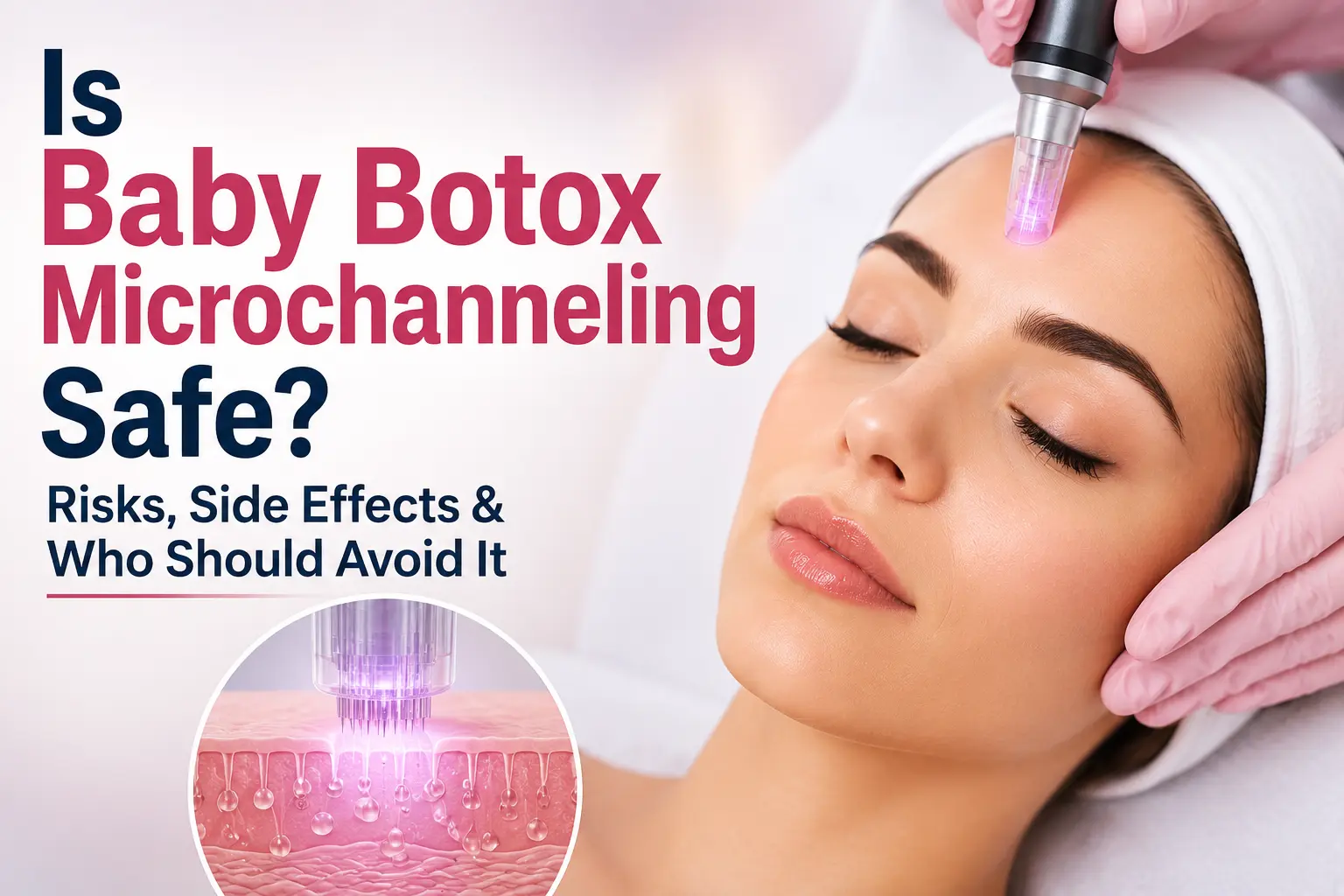
If you’ve been scrolling through your feed lately, chances are you’ve come across the term “Baby Botox Microchanneling.” It’s one of the fastest-growing treatments in the skincare world right now, and for good reason — it promises smoother, more radiant skin without the frozen, overdone look that traditional Botox is sometimes associated with. But before you book an appointment, it’s worth understanding exactly what this treatment involves, how safe it really is, and whether it’s the right choice for you.
At AuraSculpt in Manhasset, we get asked about Baby Botox Microchanneling almost every week. So let’s break down the science, the risks, and who should think twice before trying it.
What Is Baby Botox Microchanneling?
Baby Botox Microchanneling combines two popular treatments into one. “Baby Botox” refers to using a smaller, more diluted dose of Botox than what’s used in traditional treatments — enough to soften fine lines and relax muscles without eliminating natural facial movement. Microchanneling, on the other hand, uses ultra-fine needles to create tiny, controlled channels in the skin, which helps active ingredients absorb more deeply and stimulates the skin’s natural collagen production.
When combined, the micro-diluted Botox solution is delivered directly into the skin through microchanneling, rather than injected into deeper muscle tissue. The result is a subtler, more natural-looking effect — smoother texture, reduced fine lines, and a refreshed glow, without the “frozen” appearance some people associate with standard Botox.
Is It Actually Safe?
For most healthy adults, Baby Botox Microchanneling is considered a safe, minimally invasive treatment when performed by a licensed, experienced provider. Because the treatment uses a much lower concentration of Botox spread across the skin’s surface rather than concentrated injections into specific muscles, many patients find it gentler than traditional Botox.
That said, “safe” doesn’t mean “risk-free.” Like any cosmetic procedure involving needles and neuromodulators, there are things you should know before going in.
Common Side Effects
Most side effects from Baby Botox Microchanneling are mild and temporary. These can include:
- Slight redness or flushing immediately after treatment
- Minor swelling in the treated area
- Small pinpoint bruising where the microneedling occurred
- Temporary sensitivity or tightness in the skin
- Mild dryness or flaking as the skin heals over the following days
Most of these effects resolve within 24 to 72 hours. A good skincare provider will walk you through aftercare steps, such as avoiding sun exposure, skipping strenuous exercise for a day, and using gentle, fragrance-free products while your skin recovers.
Less Common but Important Risks
While rare, there are some risks worth being aware of:
- Uneven results if the product isn’t distributed evenly during the microchanneling process
- Allergic reactions, though uncommon with FDA-approved Botox formulations
- Infection, if proper sterilization protocols aren’t followed — which is why choosing a licensed, reputable provider matters enormously
- Bruising that lasts longer than expected, particularly in patients on blood thinners or with certain skin sensitivities
This is why it’s so important to have this treatment performed at a trusted medical spa with trained, certified injectors — not at a discount clinic or by someone without proper credentials.
Who Should Avoid Baby Botox Microchanneling?
This treatment isn’t right for everyone. You may want to avoid it, or at least have an in-depth consultation first, if you:
- Are pregnant or breastfeeding
- Have a known allergy to Botox or any of its ingredients
- Have an active skin infection, cold sore, or breakout in the treatment area
- Have a neuromuscular disorder (such as myasthenia gravis)
- Are currently on blood thinning medication, without medical clearance
- Have very sensitive or reactive skin prone to keloid scarring
- Are under 18, or haven’t discussed the treatment with a qualified provider
If any of these apply to you, don’t worry — a good provider will offer alternative treatments better suited to your skin and health profile.
How to Choose the Right Provider
The single biggest factor in how safe and effective this treatment is comes down to who’s performing it. Look for:
- Licensed medical estheticians or nurse injectors with specific microchanneling and Botox training
- A clean, medical-grade facility with proper sterilization practices
- A provider who takes a full health history and asks about medications, allergies, and skin conditions before treatment
- Transparent before-and-after photos of real patients
- A consultation that answers your questions without pressuring you into treatment
The Bottom Line
Baby Botox Microchanneling can be a safe, effective way to achieve smoother, more youthful-looking skin — as long as it’s done by the right hands, with the right precautions. Mild side effects are common and typically short-lived, but it’s important to know your own health history and any risk factors before booking your session.
If you’re in the Manhasset area and curious whether Baby Botox Microchanneling is right for you, the team at AuraSculpt offers personalized consultations to walk you through the process, assess your skin, and answer any questions you have — no pressure, just honest guidance.
📍 Ready to find out if Baby Botox Microchanneling is right for you? Call or text AuraSculpt in Manhasset at 516.603.9003, or visit www.aurasculpt.com to book your consultation.
FAQs:
1. What is the difference between Baby Botox Microchanneling and a regular facial?
A regular facial primarily focuses on cleansing, exfoliating, and hydrating the skin. Baby Botox Microchanneling is a more advanced aesthetic procedure that uses microchanneling techniques along with a Botox-based treatment approach to target concerns such as fine lines and skin texture.
2. Which areas of the face can be treated with Baby Botox Microchanneling?
The treatment may be used on areas where superficial fine lines, uneven texture, or enlarged-looking pores are a concern. Common areas can include the forehead, cheeks, around the mouth, and other areas selected by the provider based on your individual needs.
3. Can Baby Botox Microchanneling be combined with other aesthetic treatments?
Depending on your skin condition and treatment goals, it may be possible to combine or alternate Baby Botox Microchanneling with other aesthetic procedures. Your provider should determine which treatments can be safely combined and how they should be scheduled.
4. Is a consultation required before Baby Botox Microchanneling?
A consultation is recommended before treatment. It gives the provider an opportunity to evaluate your skin, discuss your aesthetic goals, review relevant health information, and determine whether this treatment is appropriate for you.
5. What should I tell my provider before getting the treatment?
Tell your provider about any medications or supplements you take, allergies, previous cosmetic procedures, skin conditions, and any history of unusual scarring or skin reactions. Providing complete information helps your provider plan the treatment more safely.
6. Can Baby Botox Microchanneling be used as part of an anti-aging skincare routine?
It can potentially complement a broader skincare and anti-aging routine. However, it should not replace everyday essentials such as appropriate cleansing, moisturizing, and sun protection. Your provider can help you create a routine that works alongside your treatment.
7. What type of skin concerns can make someone a good candidate for this treatment?
People interested in improving the appearance of fine lines, mild texture irregularities, enlarged-looking pores, or overall skin smoothness may consider Baby Botox Microchanneling. Suitability depends on individual skin characteristics and should be determined during a professional assessment.
8. How should I prepare my skin before a Baby Botox Microchanneling session?
Preparation varies depending on the treatment protocol and your skin type. Your provider may recommend temporarily avoiding certain irritating skincare products or procedures before the appointment. Follow the specific pre-treatment instructions provided during your consultation.