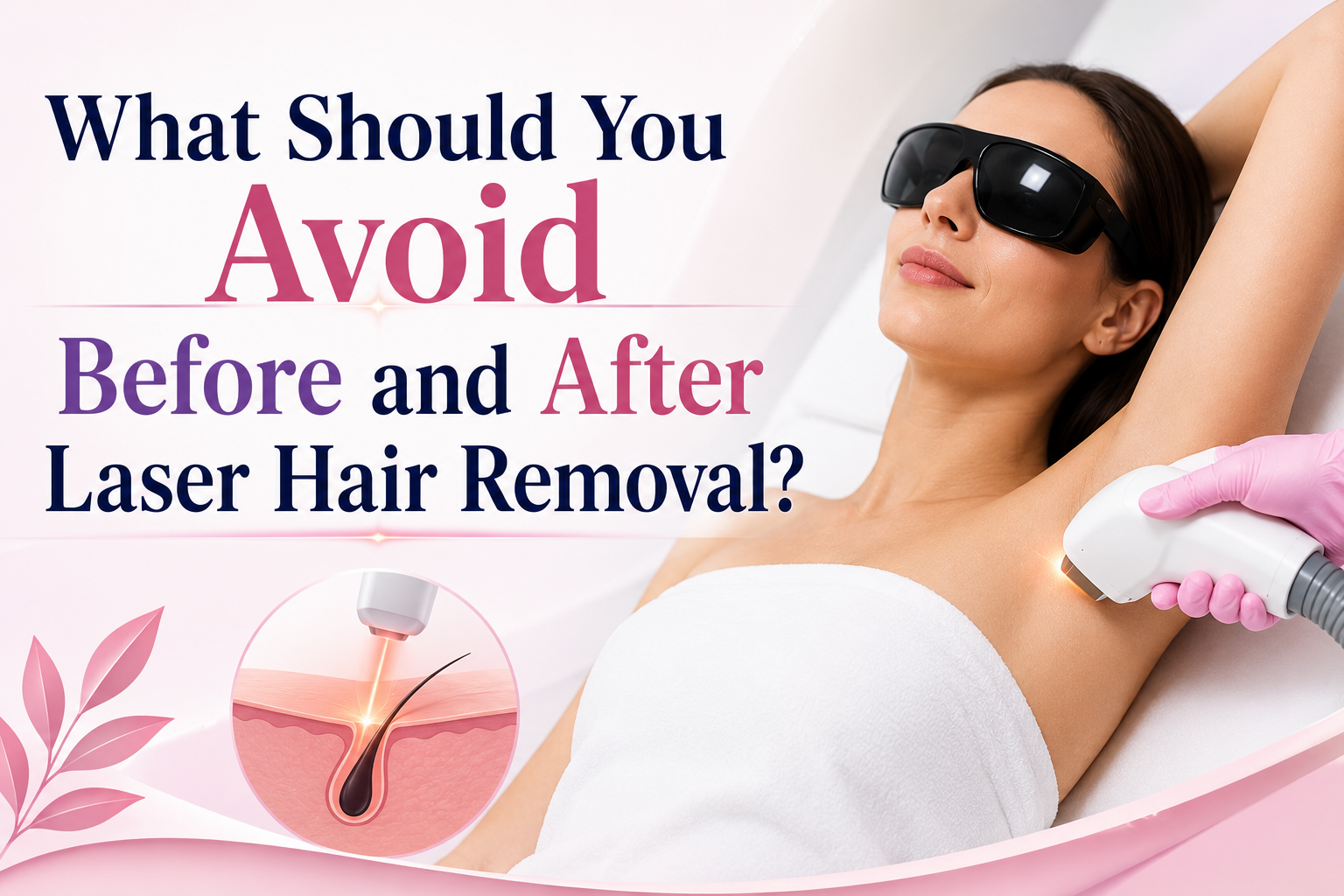
Laser hair removal has become one of the most popular cosmetic treatments for achieving smooth, hair-free skin. It offers long-lasting results and helps reduce the need for constant shaving or waxing. However, proper preparation and aftercare are essential for safe treatment and effective results.
Many people focus only on the procedure itself, but understanding what to avoid before and after laser hair removal is equally important. Following the right precautions helps minimize irritation, reduce side effects, and improve treatment outcomes.
This guide explains everything you should avoid before and after laser hair removal for the best experience and long-lasting results.
How Laser Hair Removal Works
Laser hair removal uses concentrated light energy to target hair follicles beneath the skin. The pigment in the hair absorbs the laser energy, which damages the follicle and reduces future hair growth.
Because the treatment targets active hair follicles, multiple sessions are usually needed for optimal results.
Proper skin care before and after treatment helps protect the skin and improve the effectiveness of the procedure.
What to Avoid Before Laser Hair Removal
Preparing your skin correctly before treatment is very important.
Avoid Sun Exposure
Excessive sun exposure before laser treatment can make the skin more sensitive and increase the risk of irritation or pigmentation changes.
Avoid:
- Tanning
- Sunburn
- Tanning beds
Use sunscreen regularly and avoid direct sunlight for at least two weeks before your appointment.
Avoid Waxing or Plucking
Laser treatment targets the hair root, so the follicle must remain intact.
Avoid:
- Waxing
- Threading
- Plucking
These methods remove the hair follicle and reduce laser effectiveness.
Shaving is usually allowed because it only removes surface hair.
Avoid Harsh Skincare Products
Strong skincare products can make the skin more sensitive before treatment.
Avoid:
- Retinoids
- Chemical exfoliants
- Harsh scrubs
- Strong acids
Stop using these products several days before treatment if advised by your skincare professional.
Avoid Certain Medications
Some medications can increase skin sensitivity to light and raise the risk of irritation.
Always inform your provider about:
- Antibiotics
- Acne medications
- Photosensitive medications
A consultation helps determine whether adjustments are needed before treatment.
Avoid Applying Products on Treatment Day
On the day of your session, keep the treatment area clean.
Avoid:
- Makeup
- Lotions
- Deodorants
- Perfumes
Clean skin helps reduce irritation and improves treatment safety.
What to Avoid After Laser Hair Removal
After treatment, the skin may be slightly sensitive. Proper aftercare helps protect the skin and supports healing.
Avoid Direct Sun Exposure
The skin becomes more sensitive after laser treatment.
Avoid:
- Sunbathing
- Excessive outdoor heat
- Tanning beds
Use sunscreen with high SPF to protect treated areas.
Avoid Hot Showers and Heat
Heat can irritate recently treated skin.
Avoid for 24–48 hours:
- Hot showers
- Saunas
- Steam rooms
- Hot tubs
Use lukewarm water instead.
Avoid Intense Exercise
Heavy workouts can increase sweating and skin irritation immediately after treatment.
Avoid:
- Intense gym workouts
- Running
- Activities causing excessive sweating
Allow the skin time to calm down.
Avoid Scratching or Picking the Skin
Some mild redness or irritation is normal after laser hair removal.
Do not:
- Scratch the skin
- Rub aggressively
- Pick at treated areas
Gentle skincare helps prevent irritation.
Avoid Waxing Between Sessions
Hair may gradually shed after treatment, but avoid removing it by waxing or plucking.
Shaving is generally safe between sessions if needed.
Avoid Harsh Skincare Products After Treatment
The skin may remain sensitive for a short period after treatment.
Avoid temporarily:
- Exfoliants
- Retinol products
- Strong acids
- Chemical peels
Gentle moisturizers and soothing products are recommended.
Common Side Effects After Laser Hair Removal
Mild side effects are normal and temporary.
These may include:
- Redness
- Mild swelling
- Sensitivity
- Slight warmth in the skin
These symptoms usually improve within a few hours or days.
Tips for Better Laser Hair Removal Results
To maximize your results:
Follow Your Treatment Schedule
Multiple sessions are necessary because hair grows in cycles.
Stay Consistent with Aftercare
Protecting your skin helps reduce complications and improve results.
Hydrate Your Skin
Keeping the skin moisturized supports recovery.
Choose a Qualified Professional
Experienced providers ensure safer treatment and better outcomes.
How Many Sessions Are Usually Needed?
Most individuals require multiple sessions for optimal hair reduction.
The number depends on:
- Hair thickness
- Skin type
- Treatment area
- Hair growth cycle
Many people notice significant reduction after several sessions.
Is Laser Hair Removal Safe?
Laser hair removal is generally considered safe when performed by trained professionals using appropriate technology.
A consultation before treatment helps determine:
- Skin suitability
- Treatment expectations
- Possible precautions
Conclusion
Laser hair removal is an effective and convenient solution for long-term hair reduction, but proper preparation and aftercare are essential for achieving the best results.
Avoiding sun exposure, waxing, harsh skincare products, and excessive heat before and after treatment helps protect your skin and improve treatment success.
Following professional guidance and maintaining good skincare habits can help you enjoy smoother, healthier skin with minimal discomfort.
FAQs
Can I shave before laser hair removal?
Yes, shaving is usually recommended before treatment because it preserves the hair follicle.
How long should I avoid sun exposure after treatment?
It is best to avoid direct sunlight for at least one to two weeks and use sunscreen regularly.
Is redness normal after laser hair removal?
Yes, mild redness and sensitivity are common temporary side effects.
Can I exercise after laser hair removal?
It is usually recommended to avoid intense workouts for 24–48 hours after treatment.